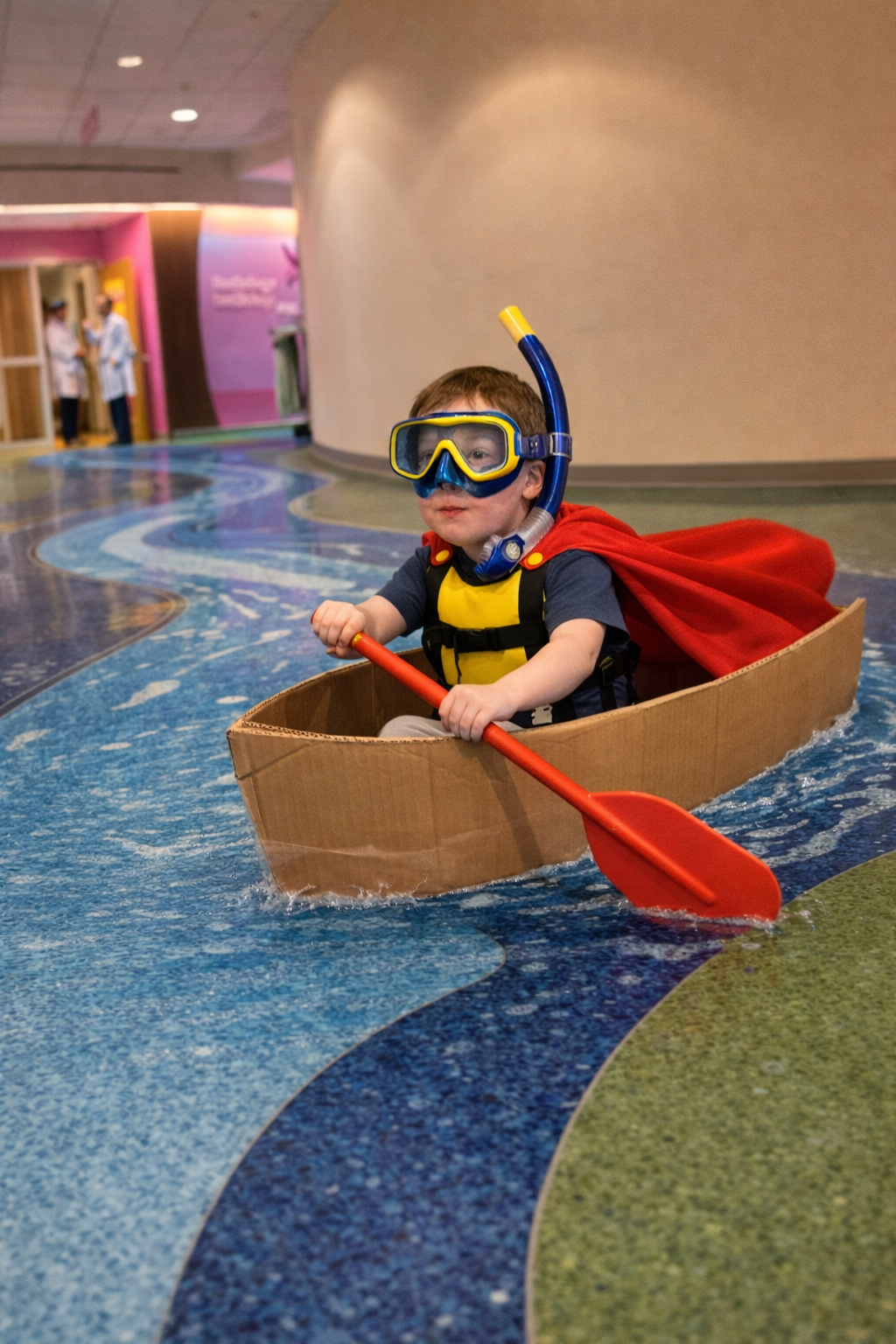
As spring break began, we went against every instinct I have as a mother.
We let my child be exposed to peanuts.
On purpose.
In a clinic.
With a team watching closely.
This is part of a clinical study designed to better understand and treat peanut allergies in a controlled setting.
I understood the why.
I trusted the process.
But it still felt like I was walking him toward the very thing I’ve spent his whole life protecting him from.
For his entire life, I’ve read labels like they were contracts.
Double-checked everything.
Carried the quiet awareness that something so small could cause something so big.
Avoidance became love in action.
So what do you do when love asks you to do the opposite?
You show up anyway.
You sit beside your child.
And you try to make something heavy feel light.
At one point, they wrapped him in a burrito to draw blood.
A sheet pulled snug around him—his little body the “tortilla.”
I joked, trying to keep it light.
Don’t be a chicken burrito—be a tough beef burrito.
Then I reframed it—because words matter.
A brave burrito.
And I told him gently
that even brave burritos cry when something hurts.
He trusted me.
In a place that didn’t feel natural.
In a process he didn’t understand.
And then, quietly, his body responded.
Not dramatically.
Not urgently.
Just subtle.
Easy to question. Easy to second guess.
And maybe that’s part of what led us here.
Part of why we chose to do this study was to better understand what a reaction actually looks like in a controlled setting.
Not just for answers—but for validation.
He had the equivalent of one peanut.
We’re told thresholds can vary from day to day.
What is tolerated once may not be tolerated the next.
He made it to about half a peanut before his body responded.
And on a different day, under different circumstances,
even a trace amount—something as small as cross-contamination—could cause a reaction.
Because from the beginning, his symptoms have often been brushed off.
Without wheezing, it was easy for others to question it.
At one point, a paramedic reassured me it was most likely viral.
And maybe that’s part of this story too—
learning to trust what I was seeing,
even when it wasn’t obvious to everyone else.
Because here’s what no one tells you—what this experience taught us:
Allergic reactions don’t always look dramatic.
Sometimes they whisper.
And the hardest part isn’t always the reaction.
It’s the decision.
The moment where you have to choose—
in real time—
whether to trust what you’re seeing
or talk yourself out of it.
What surprised me most wasn’t what happened.
It was what didn’t.
No chaos.
No overwhelming panic.
Just something small
that mattered anyway.
A well-managed allergic reaction can look incredibly calm.
Because as a mom, you think:
If it’s serious, I’ll know.
But sometimes it’s:
If I’m paying attention, I’ll catch it before it becomes serious.
And maybe that’s the shift.
Not waiting for it to look dramatic.
Not waiting for certainty.
But learning to trust the quiet knowing.
I paid attention.
I trusted my instincts.
I didn’t cause this.
I didn’t fail him.
I showed up in a space that felt completely backwards
and still did the most instinctual thing of all:
I paid attention.
We don’t know exactly what the next step will look like.
But we rest in what we do know.
We’ll go back next week and do it again.
Another day. Another round—peanut or placebo.
And that afternoon, we’ll place our first patch, not knowing if it holds peanut or not.
Completely blind.
Still moving forward.
As superhero fans, we always joke that superheroes avoid research centers…
But research isn’t the part of the story anyone celebrates.
It isn’t glamorous.
It isn’t fun.
And in the moment, it doesn’t feel redeeming.
And still, my boy is a superhero.
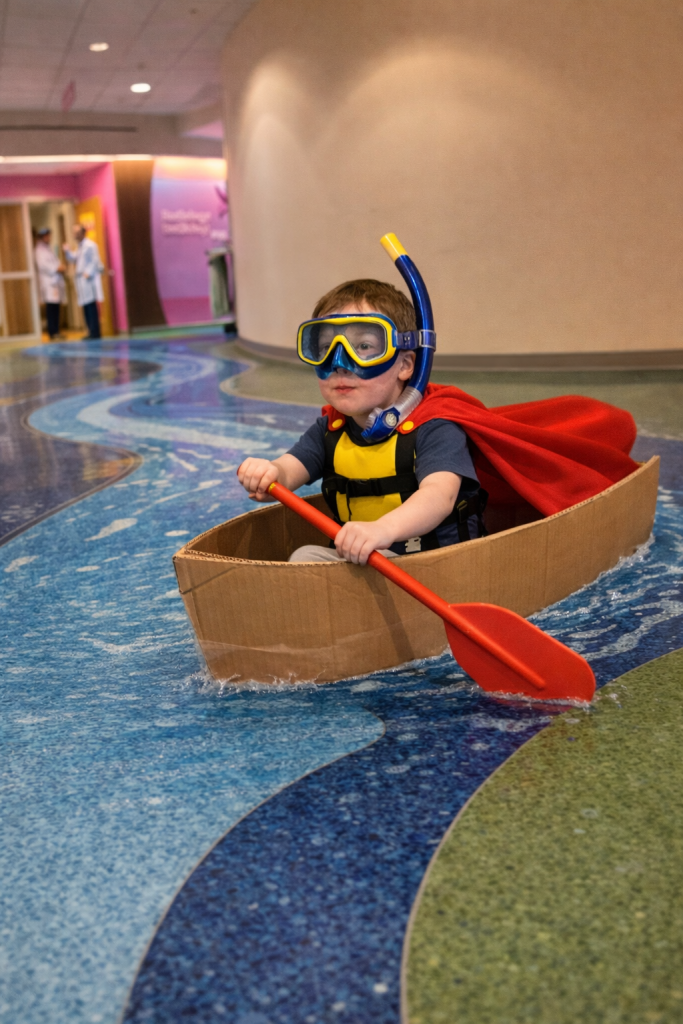
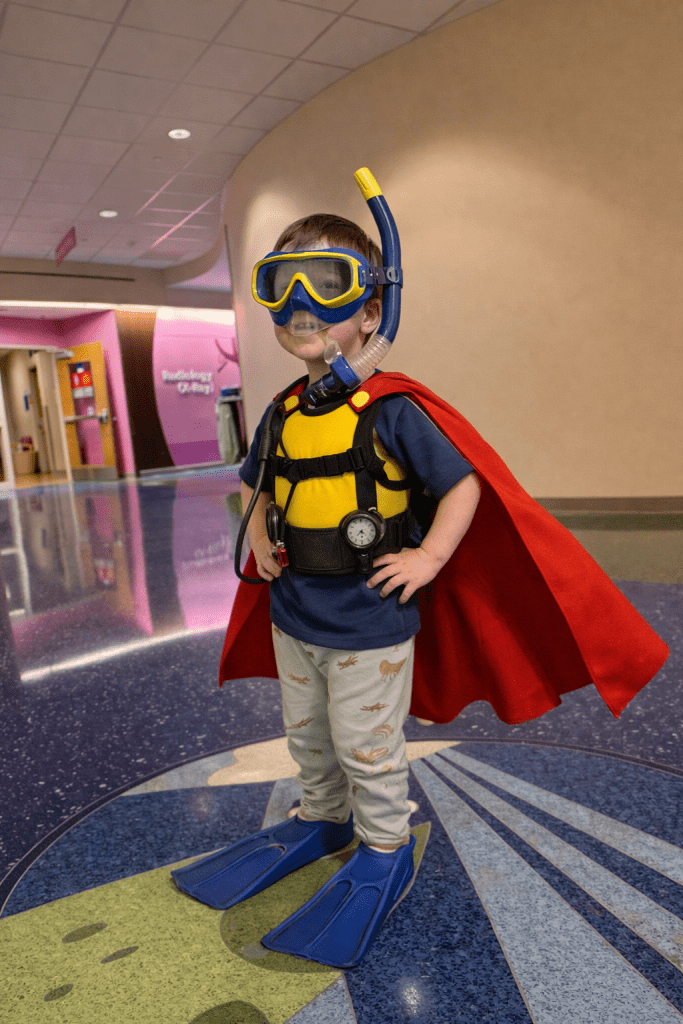
And for a moment, he’s not a patient—he’s just a little boy swimming through it.
Cape on. Goggles down.
Brave in ways most people will never see.
Fighting quiet battles no one else can see.
Changing the world—one test, one procedure, and soon, one patch at a time.
Because sometimes the real bravery isn’t avoiding the danger—
it’s walking into it together, hope in one hand and fear in the other.
Sometimes instincts are as subtle as the signs before us—
a quiet reminder to pay attention, even to the ones that don’t feel urgent.
 Finding Forty
Leave a comment