• Today, I told my husband to lie to me—and I meant it.

    If you know me, you know my number one pet peeve has always been lying. I hate it. I pride myself on honesty, even when the truth is uncomfortable. So for me to actually ask for a lie? That’s not something I did lightly.

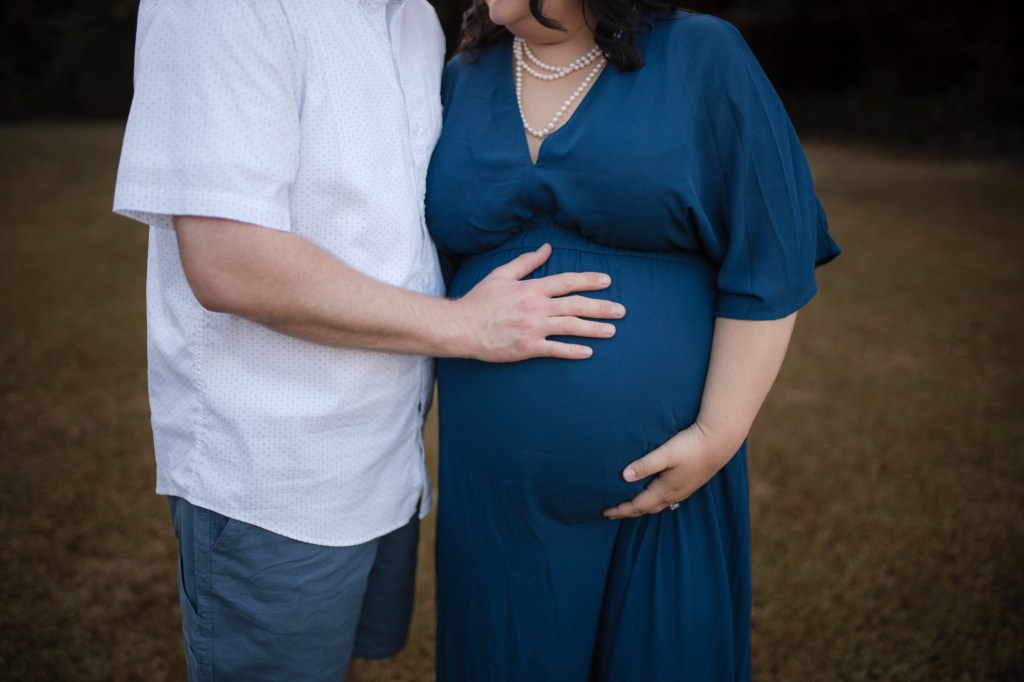
    I’m in my second pregnancy. Even before this baby, I had gained around 70 pounds since our dating days. My body is softer, my face rounder, my clothes fit differently. And still—maybe especially now—my husband never hesitates to tell me I’m beautiful.

    Messy bun, spit-up stains, food on my shirt… even when I know I look exhausted, he’ll look me straight in the eyes and say it: You’re beautiful.

    And as much as that should melt me, the truth is… it hasn’t always felt honest. In my head, flattery is lying. It makes me wonder: if he’s lying about this, what else could he lie about? Compliments start to feel like fiction.

    But today was different. Today I realized that sometimes the lie isn’t really about the words—it’s about the heart behind them. When he says I’m beautiful, maybe it’s not about my hair or my weight or the laundry on my shirt. Maybe it’s about how he sees me, even when I can’t see myself.

    And lately, there’s more at stake than just my reflection in the mirror.

    A new school year is about to begin for him at his job, and for me in a brand-new position. We have a toddler in a new stage, a baby on the way, new expenses, new pressures. He’s overwhelmed. I’m overwhelmed.

    The difference is—he speaks his fears out loud. I swallow mine. I tell myself, It’s all going to be fine. I tell him it’s all going to be fine. Logically, I know it will be. But when he says the very things I silently think but refuse to voice—when I hear them spoken into the air—it’s like my composure shatters. Suddenly, it feels like it could all come crashing down on us.

    So today, I told him: If you can lie to me and tell me I’m beautiful in the most beastly season of my life, then you can lie to me and tell me it’s all going to be alright.

    Because maybe that’s what love really is—not only telling the truth, but knowing exactly when to speak the kind of lie that holds someone together until they can believe the truth for themselves.

    The right lie, in the right moment, can feel an awful lot like faith.

  • Descended, Not Defined

    I come from a line of women who were never quite “typical.”

    My mother. Her mother. Her sister.

    All likely neurodivergent—undiagnosed, unsupported, and uncontained.

    Not women you’d call “high-functioning.”

    They didn’t mask. They didn’t assimilate.

    They lived on the margins—off systems, disconnected from stability, estranged from each other… and eventually, from me.

    Survival looked more like chaos than triumph.

    We weren’t close.

    The relationships were fractured, frayed.

    Generations of misunderstanding and unmet needs passed down like heirlooms.

    I’m estranged from my mother.

    She was estranged from hers.

    And still, I carry the imprint.

    People love to romanticize eccentricity.

    I didn’t see brilliance—I saw instability.

    I saw what happens when difference goes unsupported for generations.

    Their creativity was bizarre—sometimes fascinating, sometimes heartbreaking.

    Purses made from candy wrappers. Baby blankets stitched for grandchildren long before their daughters had even finished childhood.

    Fabric scraps and strange collections strewn through cluttered homes, filled with the remnants of projects that never found purpose.

    Self-made artists without an audience—compelled to make, but with nowhere to place it, no one to receive it, no grounding behind it.

    There was something original there, yes. But it lived alongside chaos.

    And often, it was hard to separate art from dysfunction.

    And now—this fall—I begin the school year as a Gifted and Talented teacher.

    I’ve wrestled with the word imposter.

    Because I didn’t come from excellence.

    I came from dysfunction, dependency, systems that swallowed people whole.

    I don’t come from a legacy of achievement.

    I come from women who weren’t understood, and who ultimately didn’t survive in the way we often mean when we say “survive.”

    So how did I end up here?

    Maybe not as an expert.

    But as a witness.

    As someone who knows what it looks like when a bright mind is missed—because I grew up in that shadow.

    Giftedness isn’t always tidy.

    Sometimes it screams. Sometimes it withdraws.

    Sometimes it shows up as a child no one wants to test because they’re “too emotional,” “too distracted,” “too weird.”

    But I see them.

    Because I come from them.

    And I don’t want my students to grow up misunderstood, misdiagnosed, mislabeled—

    or to be someone’s strange memory decades later.

    I want better for them.

    This isn’t about honoring a legacy I want to continue.

    It’s about interrupting one.

    I’m not here because those women taught me.

    I’m here because they couldn’t.

    And in that space—between estrangement and empathy, between survival and hope—

    I teach.

  • Today, I washed poop off a toddler, underwear, and myself.

    I am tired. Not “I need a nap” tired—soul tired. I am pull-string doll tired. Repeating the same phrases over and over like I’m the only one who hears them.

    “We don’t climb the furniture.”

    “Gentle hands.”

    “Because I said so—again.”

    Redirection? Ha. I know I should do it. I try to do it. But by the twelfth time, the only thing I’m redirecting is my sanity.

    At this point, I would sell my last brain cell for a Red Bull, a tray of sushi, some cold deli meat, and—brace yourself—a stiff drink. Maybe even a cigarette.

    And to be clear: I don’t smoke. I’ve had a cigarette, sure—preteen me used to sneak the butts from my birth mom’s ashtrays. But I’ve never smoked as an adult. That’s how deep in the trenches I am right now… craving something I don’t even want, just to feel a flicker of adult autonomy again—to choose something indulgent solely for myself, without explaining, sharing, or cleaning it up after.

    They say motherhood is precious.

    And it is.

    But not because it’s clean or calm or easy.

    It’s precious because it breaks you open. Because somewhere between the chaos and the quiet, you catch glimpses of something sacred. Like the way he serenaded me after his nap—

    “You are so beautiful to me.”

    Just like that. No prompt. No performance. Just the unfiltered tenderness of a toddler who moments earlier was treating the couch like a trampoline.

    Today was hard. Tomorrow might be too.

    But tonight, I’m going to sit in the silence (if it ever comes), crack open an Olipop, and toast my survival. Because even when I feel completely undone…

    This messy, maddening, magical work is still holy.

  • Intro:

    As I prepare to welcome my second son into the world, I find myself living in the tension between fear and faith. This is a glimpse into the quiet, anxious prayers and steady declarations that carry me through these final weeks.

    The possibility of loss and tragedy

    as I await the birth of my son

    haunts me.

    I shove the thoughts away,

    try to focus on the other possibilities.

    Statistically, most people deliver babies without tragedy.

    I plead—

    with God,

    with the universe,

    with my body,

    with my ancestors,

    with the child growing within me—

    for everything to go well.

    I need to drink more water,

    eat more vegetables,

    walk more often,

    breathe more deeply.

    Instead, I rush to

    reorganize the house,

    decorate the nursery,

    complete the tasks left undone

    since the birth of my first.

    I know it’s all going to be okay.

    I know he’s going to be perfect—

    and our hearts will radiate love and excitement.

    The fears will fade.

    The finances will work themselves out.

    The fun will unfold.

    I declare it so…

    so I know.

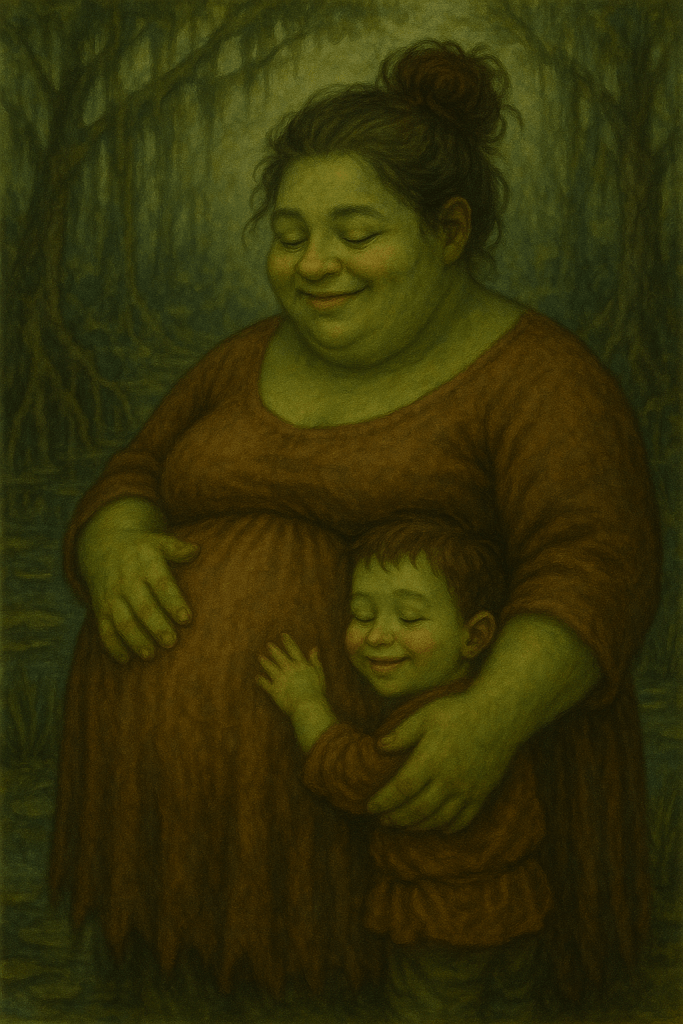
  • Swamp Witch Energy

    I’ve been home with my son for days dealing with the most disgusting virus. Even once he started feeling better, the sensory stuff lingered—chewing and spitting out food, then wiping it on me. Our “sweet” picnic moment? Yeah, that included me getting smeared with regurgitated sandwich. I redirected him to the towel like a champ, but still… 🤢

    By the time my husband got home, I was DONE. I told him I felt like a swamp witch—like I couldn’t wash the gross off of me. I felt sticky, sour, touched-out, and exhausted. I didn’t even want to eat.

    HOURS later—conversation long gone from my mind—he looks at me, all sweet and loving, and says:

    “I love you, my cute little swamp witch.”

    Y’all. I LOST it.

    Who calls their pregnant wife a swamp witch?! 😂

    It’s funny now (thanks to sleep), but in the moment? Nope. I was feral. I wish I had been soft and endearing. I was not.

    Marriage, man.

    Motherhood, too.

    We’re all just doing our best in the bog.

  • I’ve never been rich.

    Only in short, fleeting moments

    have I known what it’s like to have plenty.

    But never—until now—

    did I understand the true richness

    of a full night’s sleep.

    In my youth,

    I believed sleepless nights

    meant passion, purpose,

    or well-aligned priorities.

    Now, as a parent,

    those same hours are spent

    rocking, soothing, surviving—

    with a heart so full it hurts.

    But the person I am without sleep

    is a far cry from who I am with it.

    The difference is not subtle.

    It’s stark—concerning, even.

    Sleepless me is brittle.

    She walks the edge of tears and temper,

    where my ugliest upbringing resurfaces,

    where insecurities sharpen into weapons,

    where anxiety feels commitable.

    It’s not just exhaustion—

    it’s exposure.

    A peeling back of every layer

    I’ve worked so hard to soothe.

    And still,

    there’s nothing I long for more

    than the crisp alertness

    that follows real, uninterrupted rest.

    Because in this season,

    sleep is not just rest—

    it is restoration,

    it is wealth,

    it is grace.

    And slowly, surely,

    those full nights will return.

    And so will I.

  • When motherhood gets messy, love still shows up—even if it’s not in the ways you imagined.

    Last night was one of those nights.

    The kind where sleep feels like a stranger, and exhaustion settles deep in your bones.

    Where my chosen tones and words—sharp and frayed—leave behind regret.

    Where my actions aren’t the ones I want to remember, much less repeat.

    It was a night of toddler rage.

    Cookies and Elmo at midnight—because why not?

    “You want it? You got it. Just calm down.”

    Was I spoiling him?

    Or was I showing him what unconditional love looks like, even at 2 a.m.?

    He hit himself in the head. Screamed.

    Pain I couldn’t relieve.

    I held his ears between my palms, a small gesture to show I understood.

    He settled for a moment.

    Then Advil.

    Then louder screams.

    And while I tried to comfort one child, the other—still nestled inside me—took blow after blow from tiny, panicked feet.

    My swollen belly bore it all.

    I peed my pants.

    Not from laughter.

    Not from surprise.

    Just from sheer overwhelm and the strain of it all.

    And I cried out—but only in my mind.

    Because there was no time to fall apart.

    My husband holds me tight, tells me it will be alright.

    Just kidding. I’m dreaming.

    We’re too tired for niceties.

    Instead, he helped me swap my panties for something clean and dry

    while giving a countdown of how many hours we might still plausibly sleep.

    That’s love too, I think.

    Not flowers. Not poetry.

    But hands that help you stand in the mess.

    The air felt thick with confusion.

    Each of us grasping for control.

    Each of us desperate to feel safe.

    This is the part of motherhood people don’t post.

    The midnight meltdowns.

    The decisions that blur the line between boundaries and survival.

    The shame, the pee, the guilt, the love.

    It’s not picture perfect.

    It’s not even passable some nights.

    But it’s real.

    And I’m still here.

    Still showing up.

    Still holding him through the storm.

    Still holding me through it, too.

    Looking forward to the day we hold each other again.

  • My body aches.

    My mind won’t stop.

    Everything I feel feels too loud, too much, too fast.

    I snap. I shut down. I come back in guilt.

    I want to hold my son and also run from the weight of being needed.

    Motherhood feels natural to me—

    but it’s still heavy.

    And it’s heavier when I remember

    that my mother said she loved me

    but made me feel impossible to love.

    She left her mother behind.

    Said she was toxic.

    Broken. Cold.

    And now I’ve done the same to her.

    And I don’t know if that makes me brave

    or just the next link in the chain.

    I swore I’d be different.

    I am different.

    But here I am—cutting ties just like she did.

    Calling it protection.

    Calling it peace.

    Calling it survival.

    And still—

    my son looks at me like I’m safety.

    Like I’m everything.

    He doesn’t know the questions that live inside me.

    The fear that maybe I’m still echoing her in ways I can’t see.

    Am I healing?

    Or just surviving quieter?

    I hold him close and whisper love like it’s oxygen.

    Because I never want him to wonder.

    I never want him to ache like I did.

    But sometimes, in the dark—

    the echo returns:

    What if I am the storm I swore to protect him from?

    Let the pain stop with me.

    Let the love carry him farther than I was ever carried.

  • Written by Jane Elliott

    I pumped for three months—hard core.

    Power pumping. Alarms buzzing. Middle-of-the-night sessions while the rest of the world slept and my baby dreamed beside me. I cried, wanting to give him what had been sold to me as “best.”

    For four months, I tried to latch him regularly. And for the next five, we danced an on-and-off rhythm that often felt more like grief than connection.

    I felt crazy.

    I felt weird.

    Why couldn’t we just figure it out?

    Sure, money mattered. Formula isn’t cheap. But this wasn’t just about finances. It was about fear. Fear that I was falling short. That I was giving him less than what he deserved. I turned to donor milk, hoping it would bridge the gap—but much of it was bitter, and he often refused it.

    Eventually, I stopped.

    There was no grand moment. No dramatic exhale or sobbing finale.

    Just… space. Quiet. An in-between.

    Not overwhelming sadness. Not magical relief.

    Just the slow settling into something new.

    And as I kept moving forward—one day, one feeding, one surrender at a time—I grew closer to becoming the mother he needed me to be.

    I started taking note of his needs, rather than forcing mine.

    Watching him, not my plan.

    Meeting him where he was, not where I wished he’d be.

    That is the most beautiful transformation I’ve experienced:

    Seeing him for who he is—not who I hoped he’d be—even as a tiny human.

    And offering myself that same grace.

    That’s where our bond truly deepens.

    Not in the ounces.

    Not in the perfect latch.

    Not in the expectations I clung to.

    But in the gentle unfolding of trust.

    In choosing presence over perfection.

    And in loving each other through the letting go.

    And if you’ve struggled too—even in the midst of success—I want you to know: I’m proud of you.

    For the trying.

    For the surrender.

    For the growth.

    Momma, you’re doing the hard things. And you’re doing them beautifully.

  • “Are You My Mother?” is a classic children’s book where a baby bird searches the world, asking every creature the same question—“Are you my mother?”—until finally, it finds its way back home.

    But for me, that story didn’t bring comfort.

    It brought confusion.

    It wasn’t my favorite book growing up.

    It unsettled me. It made me feel more lost than found.

    As an abandoned child, I didn’t see a sweet adventure.

    I saw my own reality—the relentless search for a mother figure, the fear of never quite finding home.

    I didn’t relate to the resolution. I related to the ache.

    That little bird’s journey didn’t feel like fiction.

    It felt like mine.

    The Search for a Mother

    I’ve spent my whole life searching—not for the woman who gave birth to me, but for a mother. Someone who could offer safety, softness, a place to land. Someone who would stay.

    I’ve found women who stood in the gap—teachers, mentors, temporary stand-ins—but I never truly knew the kind of unconditional, instinctive love that many describe in motherhood.

    I’m deeply grateful for my adoptive mom. She chose me. She offered love with intention. We’re strikingly similar in personality, in how we move through the world. She is the daughter of Gigi—her mother, a strong, resilient woman who became the first in her family to meet society’s version of success. A generational overcomer.

    And still… even with all the appreciation and connection between us, something in the relationship doesn’t always feel deeply rooted. Maybe it’s the echo of my earliest losses. Maybe it’s the structure of survival that shaped us both. But I’ve learned that love and grief often coexist.

    One doesn’t cancel the other.

    When I Became a Mother

    As I prepared for the birth of my firstborn, the ache I had carried all my life became deafening.

    I was sure—so sure—that this time, the support I had always longed for would be there. That I had finally found family. That I had a mother to walk beside me into this next chapter.

    But then Gigi got sick. And my adoptive mom—her only daughter—had to go. Her place was at her mother’s side.

    I understood. Logically, it made perfect sense.

    But my heart felt wrecked.

    Felt abandoned.

    Because when a woman becomes a mother, some part of her still aches for her mother, too. For someone to say, “You’re not alone in this.”

    What I Packed Instead

    I didn’t reach out to Linda, my birth mother.

    As much as I yearned for a mother, I knew she wasn’t the one.

    I didn’t feel safe with her. I didn’t feel hopeful.

    She was like a mama bird coated in oil—the oil of addiction, poverty, mental illness, and generational pain.

    So instead of reaching for her, I quietly packed a mini bottle of Crown Royal in my hospital bag—in her place.

    Not to drink. Not to numb.

    But to name something.

    Because Crown Royal was her liquor of choice.

    That bottle wasn’t just whiskey.

    It was legacy.

    It was memory.

    It was mourning.

    I come from Crown Royalty—but not the kind of crown you wear with pride.

    Purple velvet. Gold trim. Generational addiction disguised as something regal.

    And Then—He Arrived

    My son.

    And with him, the ache deepened.

    So did the longing for support—for someone to mother me while I became a mother myself.

    And still—love showed up.

    We were privileged to have a doula, a friend, who’d met me in one of the darkest seasons of my life. She stood beside me during labor—feeding me ice, playing my birthing playlist, offering encouragement. My oldest sister held my newborn while I slept—hours of sacred silence that let me breathe. My best friend—my chosen sister—brought food, care, and comfort. She stayed at the hospital as my baby fought for his life.

    In those moments, I caught a glimpse of a different kind of royalty.

    The Love of Christ—Earthside

    Not passed down by blood.

    Not tied to lineage or legality.

    But chosen. Present. Redemptive.

    The kind of love scripture speaks of.

    The kind that breaks curses.

    The kind that builds something new.

    This is what I’m learning:

    I may come from Crown Royalty.

    But my son?

    He comes from a new kind of crown.

    One of grace.

    Of chosen family.

    Of love that stays.

    Thank you for reading.

    If this story resonates with you, know you’re not alone in your journey of longing, loss, and becoming.