I’m Jane Elliott—wife, teacher, writer, mother, former foster parent, and a woman learning to navigate the beautiful and brutal in-between.
Raised in chaos and shaped by the question, “What would my 40-year-old self say?”—I write to make sense of the past and to carve gentleness into the present.
This blog is part reflection, part becoming—a space for grief, grace, and growth.
One birthday, one breath, one brave word at a time.
I’ve been home with my son for days dealing with the most disgusting virus. Even once he started feeling better, the sensory stuff lingered—chewing and spitting out food, then wiping it on me. Our “sweet” picnic moment? Yeah, that included me getting smeared with regurgitated sandwich. I redirected him to the towel like a champ, but still… 🤢
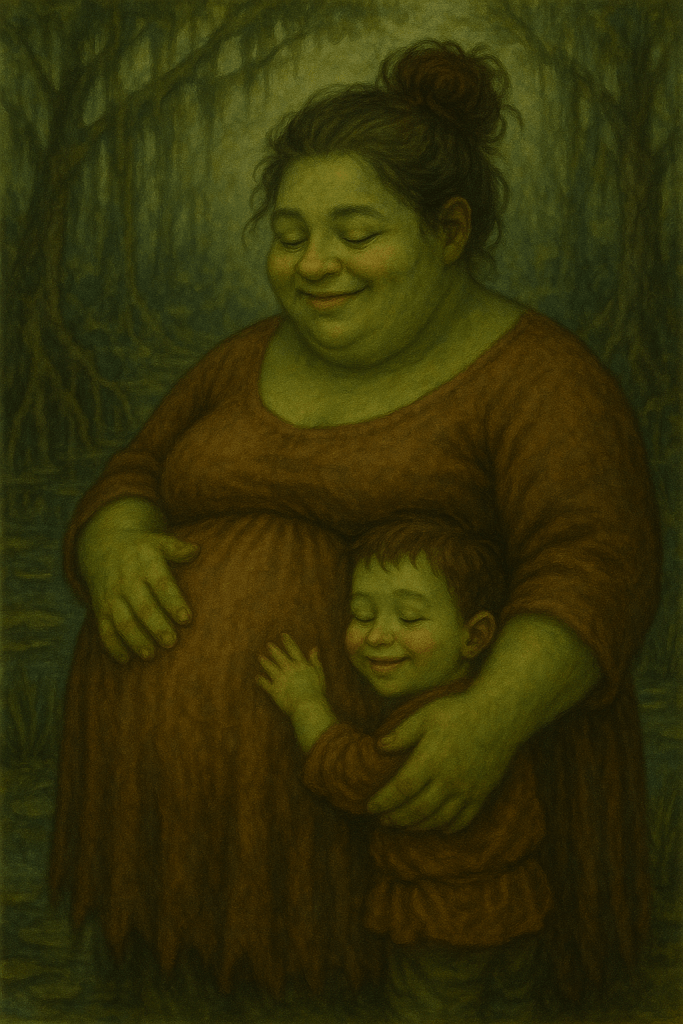
By the time my husband got home, I was DONE. I told him I felt like a swamp witch—like I couldn’t wash the gross off of me. I felt sticky, sour, touched-out, and exhausted. I didn’t even want to eat.
HOURS later—conversation long gone from my mind—he looks at me, all sweet and loving, and says:
“I love you, my cute little swamp witch.”
Y’all. I LOST it.
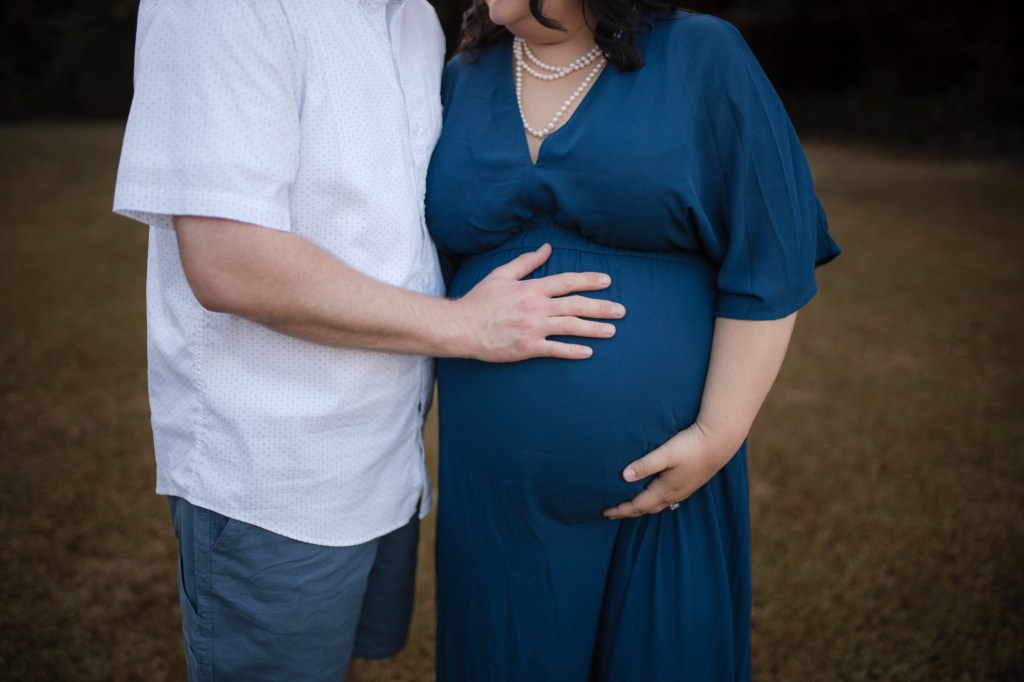
Who calls their pregnant wife a swamp witch?! 😂
It’s funny now (thanks to sleep), but in the moment? Nope. I was feral. I wish I had been soft and endearing. I was not.
Power pumping. Alarms buzzing. Middle-of-the-night sessions while the rest of the world slept and my baby dreamed beside me. I cried, wanting to give him what had been sold to me as “best.”
For four months, I tried to latch him regularly. And for the next five, we danced an on-and-off rhythm that often felt more like grief than connection.
I felt crazy.
I felt weird.
Why couldn’t we just figure it out?
Sure, money mattered. Formula isn’t cheap. But this wasn’t just about finances. It was about fear. Fear that I was falling short. That I was giving him less than what he deserved. I turned to donor milk, hoping it would bridge the gap—but much of it was bitter, and he often refused it.
Eventually, I stopped.
There was no grand moment. No dramatic exhale or sobbing finale.
Just… space. Quiet. An in-between.
Not overwhelming sadness. Not magical relief.
Just the slow settling into something new.
And as I kept moving forward—one day, one feeding, one surrender at a time—I grew closer to becoming the mother he needed me to be.
I started taking note of his needs, rather than forcing mine.
Watching him, not my plan.
Meeting him where he was, not where I wished he’d be.
That is the most beautiful transformation I’ve experienced:
Seeing him for who he is—not who I hoped he’d be—even as a tiny human.
And offering myself that same grace.
That’s where our bond truly deepens.
Not in the ounces.
Not in the perfect latch.
Not in the expectations I clung to.
But in the gentle unfolding of trust.
In choosing presence over perfection.
And in loving each other through the letting go.
And if you’ve struggled too—even in the midst of success—I want you to know: I’m proud of you.
For the trying.
For the surrender.
For the growth.
Momma, you’re doing the hard things. And you’re doing them beautifully.
“Are You My Mother?” is a classic children’s book where a baby bird searches the world, asking every creature the same question—“Are you my mother?”—until finally, it finds its way back home.
But for me, that story didn’t bring comfort.
It brought confusion.
It wasn’t my favorite book growing up.
It unsettled me. It made me feel more lost than found.
As an abandoned child, I didn’t see a sweet adventure.
I saw my own reality—the relentless search for a mother figure, the fear of never quite finding home.
I didn’t relate to the resolution. I related to the ache.
That little bird’s journey didn’t feel like fiction.
It felt like mine.
The Search for a Mother
I’ve spent my whole life searching—not for the woman who gave birth to me, but for a mother. Someone who could offer safety, softness, a place to land. Someone who would stay.
I’ve found women who stood in the gap—teachers, mentors, temporary stand-ins—but I never truly knew the kind of unconditional, instinctive love that many describe in motherhood.
I’m deeply grateful for my adoptive mom. She chose me. She offered love with intention. We’re strikingly similar in personality, in how we move through the world. She is the daughter of Gigi—her mother, a strong, resilient woman who became the first in her family to meet society’s version of success. A generational overcomer.
And still… even with all the appreciation and connection between us, something in the relationship doesn’t always feel deeply rooted. Maybe it’s the echo of my earliest losses. Maybe it’s the structure of survival that shaped us both. But I’ve learned that love and grief often coexist.
One doesn’t cancel the other.
When I Became a Mother
As I prepared for the birth of my firstborn, the ache I had carried all my life became deafening.
I was sure—so sure—that this time, the support I had always longed for would be there. That I had finally found family. That I had a mother to walk beside me into this next chapter.
But then Gigi got sick. And my adoptive mom—her only daughter—had to go. Her place was at her mother’s side.
I understood. Logically, it made perfect sense.
But my heart felt wrecked.
Felt abandoned.
Because when a woman becomes a mother, some part of her still aches for her mother, too. For someone to say, “You’re not alone in this.”
What I Packed Instead
I didn’t reach out to Linda, my birth mother.
As much as I yearned for a mother, I knew she wasn’t the one.
I didn’t feel safe with her. I didn’t feel hopeful.
She was like a mama bird coated in oil—the oil of addiction, poverty, mental illness, and generational pain.
So instead of reaching for her, I quietly packed a mini bottle of Crown Royal in my hospital bag—in her place.
Not to drink. Not to numb.
But to name something.
Because Crown Royal was her liquor of choice.
That bottle wasn’t just whiskey.
It was legacy.
It was memory.
It was mourning.
I come from Crown Royalty—but not the kind of crown you wear with pride.
Purple velvet. Gold trim. Generational addiction disguised as something regal.
And Then—He Arrived
My son.
And with him, the ache deepened.
So did the longing for support—for someone to mother me while I became a mother myself.
And still—love showed up.
We were privileged to have a doula, a friend, who’d met me in one of the darkest seasons of my life. She stood beside me during labor—feeding me ice, playing my birthing playlist, offering encouragement. My oldest sister held my newborn while I slept—hours of sacred silence that let me breathe. My best friend—my chosen sister—brought food, care, and comfort. She stayed at the hospital as my baby fought for his life.
In those moments, I caught a glimpse of a different kind of royalty.
The Love of Christ—Earthside
Not passed down by blood.
Not tied to lineage or legality.
But chosen. Present. Redemptive.
The kind of love scripture speaks of.
The kind that breaks curses.
The kind that builds something new.
This is what I’m learning:
I may come from Crown Royalty.
But my son?
He comes from a new kind of crown.
One of grace.
Of chosen family.
Of love that stays.
Thank you for reading.
If this story resonates with you, know you’re not alone in your journey of longing, loss, and becoming.
How My Winding Road to Motherhood Taught Me to See Beauty in the Unlikely
I’m a mother to two boys—one in utero and one nearly two. Before this, I was a stepmom (full-time), a bonus mom, a foster mom, and a plant mom. Maybe one day I’ll be a dog mom, too.
My dream of motherhood never required pregnancy or birth. I’ve always felt drawn to care for anyone—or anything—that needed it. Traditional paradigms don’t come naturally to me. I often feel like I’m reading the script of social norms in a language I don’t quite understand. Masking is a full-time job, and the older I get, the less energy I have to put on that particular costume.
One of the darkest reasons I hesitated to try intensely for biological children was genetics—both mine and my husband’s. We are the chain-breakers of our lineages. In our biological families, children were seen as burdens. To be loved was to be spoiled. I feared looking into my child’s face and seeing my father’s eyes, my uncle’s sense of humor, or my mother’s jawline. The fears were endless. Ultimately, I feared biology would betray me—that I’d despise the children I longed to love.
Therapy helped. I started in 2008 and have returned off and on since. We worked through those fears. I came to peace with the idea of fostering or adopting—offering permanence to a child who needed it felt like more than enough.
I remember sitting in a foster/adoption class surrounded by couples sharing heartbreaking stories of infertility. My husband and I had never truly tried to conceive. Passing on our genetics had never been the goal.
Then we had our first placement. Two years. They reunified with their mom, and my husband was shattered. Heartbroken. He had loved being a father, and when the plan shifted from adoption to reunification, grief overcame him.
I process life through humor—dark or otherwise. When we got into the car after that goodbye, I joked, “They’re sad, but they have a gift: a free card. They can have unlimited sex with no consequences.”
I turned to my husband and said, half-laughing, “What if we have a free card too? And we’re letting it go to waste? What if we tried—just for the fun of it?”
He laughed with me, and we agreed.
Eleven days later—eleven!—we had a positive pregnancy test. What a crock. So much for the free card.
At the time, we were still fostering, my husband was beginning to experience unexplained, crippling pain (later diagnosed as Stiff Person Syndrome), and I was finishing a two-year career commitment that had taken everything out of me.
As expected, motherhood brought triggers. But not in the ways I feared. In fact, it’s offered glimmers of hope. Even though I’m estranged from my biological family, I now get the unexpected privilege of seeing the best of them—traits and features I had once feared—in my children. And I get to love those parts, free from the stains of generational trauma.
It feels like I’m seeing a glimpse of who they might’ve been if they hadn’t been such a burden to the ones before them.
If you’ve taken an unexpected path into parenthood—or still find yourself questioning what that path should be—you’re not alone. I’m rooting for the caregivers, the questioners, the ones who carry hope and hurt in equal measure. Always.
But for me, it lands like a stone in water—heavy, unsettling, rippling through layers of memory I’d rather not touch.
This year, like so many others, I find myself struggling to answer. Not because I’m shy or selfless, but because I honestly don’t know. I don’t know how to want anything right now.
Gestational diabetes has stripped even food of its comfort. The idea of a slice of cake or a celebratory lunch doesn’t feel joyful—it feels dangerous. What used to be simple—blowing out candles, indulging in a favorite meal—now comes with calculations, caution, and consequences.
It’s a strange thing, grieving food. Grieving comfort. Grieving simplicity.
And beyond the physical, there’s the emotional weight of this day.
My birthday holds a history—some years marred by arguments between parents who didn’t know how to be kind to each other. Some years were marked by chaos: a cake thrown on the ground, blue icing melting into dirt. I remember being small, unnoticed, wondering if I was allowed to eat the pieces the ants hadn’t found yet.
Other years? Just silence. Forgotten. Overlooked.
Honestly, I preferred the forgetting. It hurt less than the chaos.
Now, as an adult, I usually retreat. I recluse. I try to make peace with where I am in life and where I hope to be. I ask myself the kinds of questions a child shouldn’t have had to ask—but did.
Because at 11 years old, with a fractured childhood and an absent mother, I began wondering, “What would my 40-year-old self say to me?” That imagined voice became a kind of lifeline—my compass when I didn’t have one. I clung to the wisdom of women older than me, hoping their lived truths would fill in the gaps left by those who couldn’t show up.
Each year since has felt like a step toward that 40-year-old self.
Now, I’m 39. Knocking on 40’s door.
And I still find myself asking: Am I becoming the woman I needed back then?
Birthdays make space for that kind of reflection. Sometimes unwillingly.
They stir up guilt, too. Because it’s not just my day. Before it’s mine, it’s Linda’s. Just saying her name is enough for those who know. The emotional charge around that relationship still pulses beneath the surface. It makes celebration feel awkward, unsettled—like trying to dance while holding your breath.
So when someone asks, “What do you want for your birthday?”—the most honest answer is:
I want to get through it.
I want gentleness.
I want low expectations.
I want not to feel broken for needing all of that.
But even beneath the grief and the grit, there is something else—a quiet ember of hope.
Because I am still here. I’m still showing up. Still growing. Still asking hard questions, which means I haven’t given up on living into the answers.
There’s hope in the way I parent—imperfectly, but with intention.
There’s hope in choosing gentleness over guilt, honesty over performance.
There’s hope in becoming.
So no, I may not know what I want for my birthday.
But I know what I’m becoming.
And maybe—just maybe—that’s enough of a gift for now.
First it was too polished. Then too raw. Then it didn’t sound like me at all.
And maybe that’s the best way to start: with a confession that I’m still finding my voice.
I’m Jane. Wife, teacher, mother, writer. Former foster parent.
Lover of soft blankets, hard questions, and the quiet spaces where real life tends to whisper.
I started this blog not because I have answers—but because I have stories. Because I’m learning that we make sense of things by saying them out loud, by stringing sentences together until something sacred emerges. Because the past shaped me, the present is stretching me, and the future? Well… I’m still making peace with how uncertain it feels.
This blog isn’t meant to be perfect. It won’t be shiny or scripted.
It will be equal parts grace and grief. It will hold space for the woman I was, the mother I’m becoming, and the days when I’m both at once.
You’ll find reflections here—on motherhood and memory, on faith and doubt, on marriage and identity and everything tender in between. Some days will look like poetry. Others will feel like laundry lists.
But my hope is that, somehow, something here will feel like a warm light left on just for you.
If you’re walking through something you can’t name yet—if you’re tired, or healing, or holding joy and sorrow in the same hand—then I want you to know this: You are not alone.
This space is for the in-between. And I’m so glad you’re here.